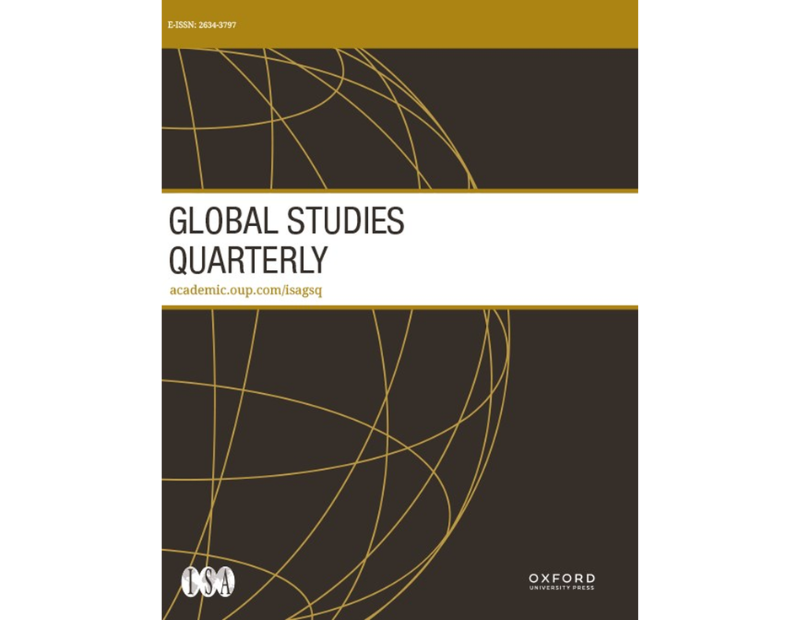
Together with colleagues from the University of Bremen, our researcher Dr. Kressen Thyen has just published an article in Global Studies Quarterly on “Land Conflicts and Land Meanings in Contemporary Africa.” Drawing on examples from North and Sub-Saharan Africa, the article identifies divergent and often conflicting meanings of land that run counter to dominant development discourses, examines the main patterns of conflict associated with each understanding, and explores their implications for land politics across Africa.
Abstract:
The commodification of land does not go uncontested in contemporary Africa. In this paper, we apply a Polanyian perspective to analyze the role of the non-commodified meanings and understandings of land in conflicts over land use in African countries. We posit that the socially exclusive and ecologically destructive effects of land commodification generate discontent and are therefore in continuous demand for legitimation to counter non-commodified aspirations regarding land use and to counter the rival meanings of land itself. Land means belonging, sacrality, recreation, and soil, and each of these four semantics fills diverse areas of the political space in which peasants, rural movements, intellectuals, epistemic communities, state agencies, and international organisations engage, bringing into play their own visions, ideas, and interests. Drawing on examples from North and Sub-Saharan Africa, we identify the primary conflictual patterns within each understanding of land, their implications for African land politics, and explain why the dominant developmental discourses on land use in Africa are marred by a narrow and harmful discursive focus on the matter.
You can access the paper with open access here.
Roy Karadağ, Kressen Thyen, Anna Wolkenhauer, Sarah Penteado, Klaus Schlichte (2026): Land Conflicts and Land Meanings in Contemporary Africa, Global Studies Quarterly, Volume 6, Issue 3, https://doi.org/10.1093/isagsq/ksag106